disappointed. I expected a colorful biography of one of the most Polish women of the twentieth century. And what I got? Okraszoną exaggerated story with too many totally irrelevant insertions, over which hovers the spirit of an omniscient author, who appropriates the story for yourself.

subject, which undertook to develop Tuszyńska was completely unused. Where are the pre-war scandals? I did not expect descriptions of the heroine's sexual excesses, but the way Tuszyńska describes prewar Boheme, or rather lack thereof, leaves the mouth feeling of disgust. Strange, because the life of Irena Krzywicka this material for not one, but a lot of biographies and movies.
Krzywicka Irena was born in 1899 Polonised in a Jewish family. As a little girl was orphaned by his father, was raised by her mother - a teacher, which was in perfect relationship to the rest of your life. In the twenties ended Polish Studies at Warsaw University, she married George Krzywicki's lawyer, the son of well-known sociologist Louis. She two sons with him from the beginning remain in an open marriage.

Krzywicka portrayed by Witkiewicz in 1928.
belonged to one of the most colorful characters in Warsaw bohemian. She was the author of several novels, has translated Wells and Frisch (Homo Faber), and popularized in Poland is the work of Proust. A turning point in her life turned out to be a meeting with the Boy-Żeleńskim. Their affair was one of the most notorious scandals of the interwar period. Total dealt with a lover in the promotion of sexual education, has raised a public forum problems which hitherto themes - taboo: abortion, homosexuality and sexuality in women. Proclaimed the sexual freedom of women, called for improving conditions in prisons. Together they founded the Boy in the Warsaw clinic where advice was informed about motherhood.
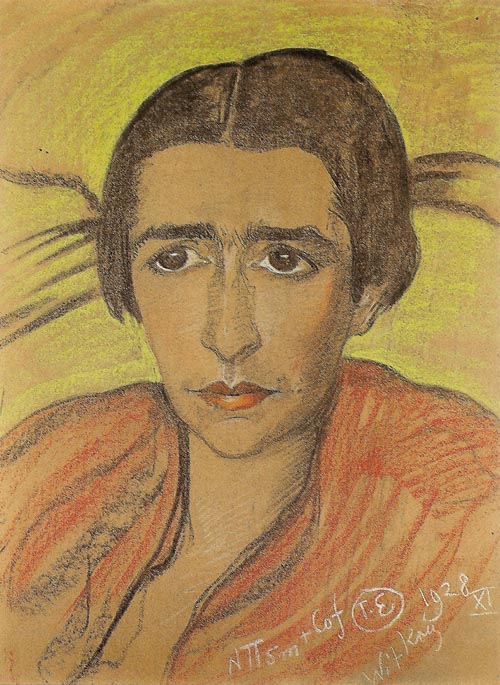
"Portrait of Irena Krzywicka - Witkacy (1928)
War was for severe Krzywicka blow, left three men, whom she loved - son of Peter, her husband and her Boy. After the war he had a brief affair with communism, only to go abroad. Krzywicka was a woman of flesh and blood, strong, conscious of their own values, but above all, able to devote themselves to others.
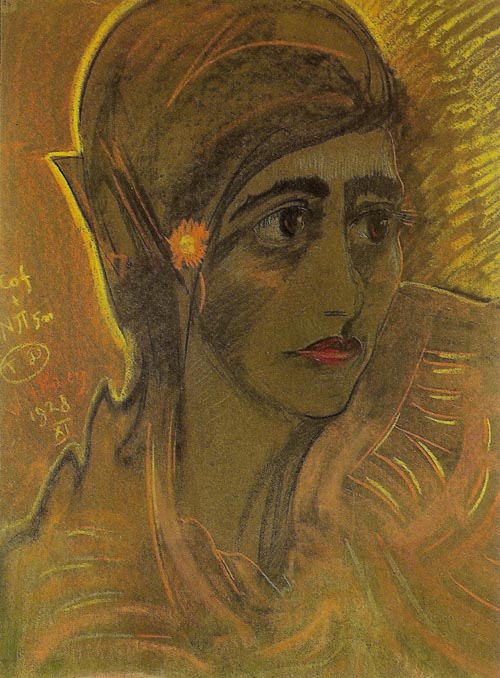
Another portrait of Irene by Witkiewicz (1928)
I wrote probably the most negative review, so far, ironically, a book review about a woman, which in some sense of admiration, and therefore I'm going to reach equilibrium after the author's autobiography - "Confessions gorszycielki. At the end of a little honey, a variety I liked the story statements friends and family, gave her a taste of authenticity.
Interview with Irena Krzywicka:


0 comments:
Post a Comment